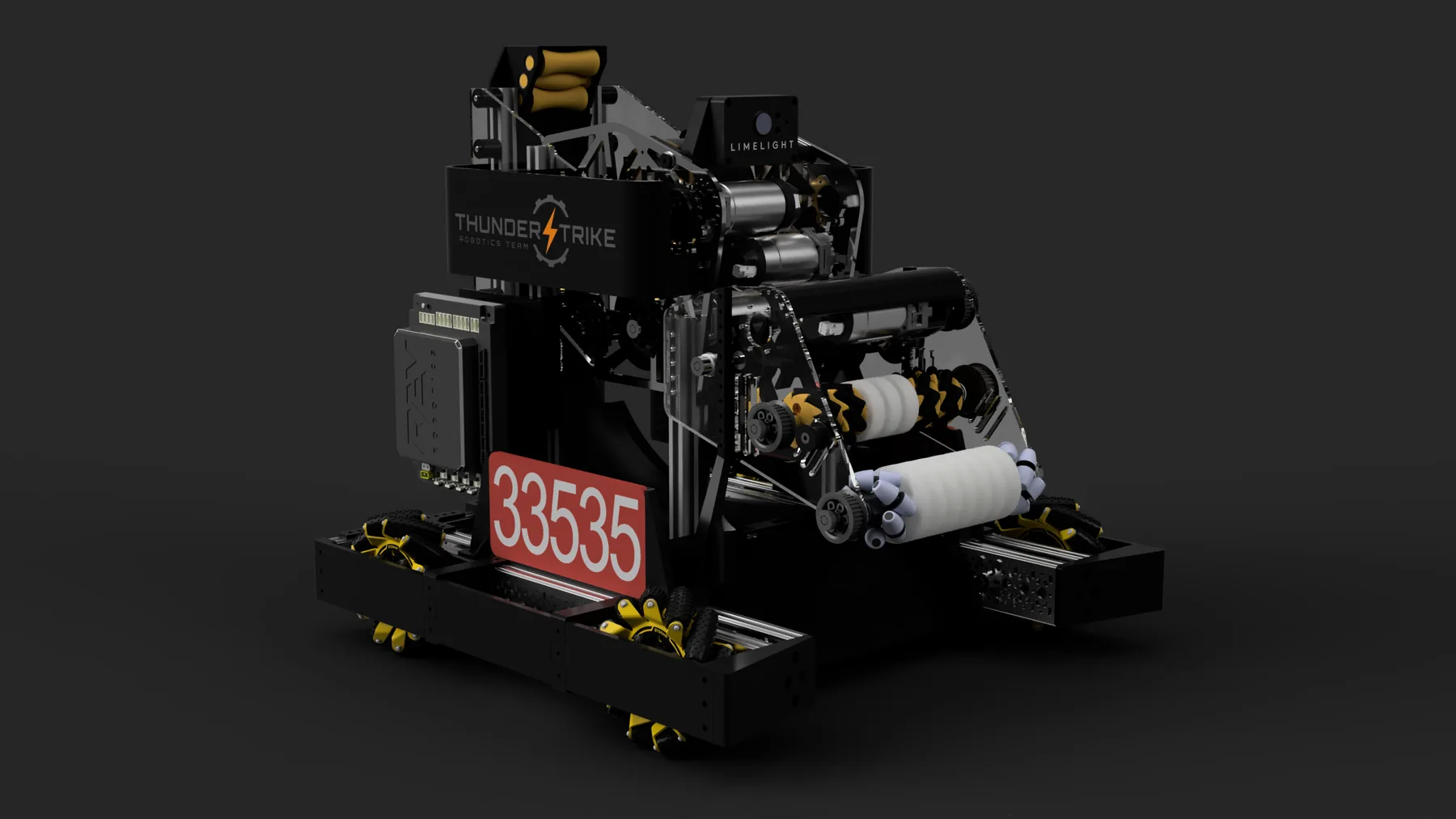
Fortunate Son, Thunderstrike's competition robot, seen from behind

Fortunate Son

Built by students. Portugal's first FIRST® Tech Challenge robot.

Designed, manufactured, programmed and built in Oeiras. From Portugal to the world.

The machine

Take it
apart.

Fortunate Son's game — DECODE: Two and a half minutes, four robots, one walled field. Hollow plastic balls are scattered across the floor and every one a robot lands in the goal scores. The first thirty seconds of it are played with nobody driving. That is the whole job — and every part below answers a problem it creates.

The game

Fortunate Son
plays DECODE.

Every year the world's high-school robotics league sets a new game, and every team gets the same six months to build a machine for it. This season's game is DECODE. Two robots a side, red against blue, two and a half minutes.
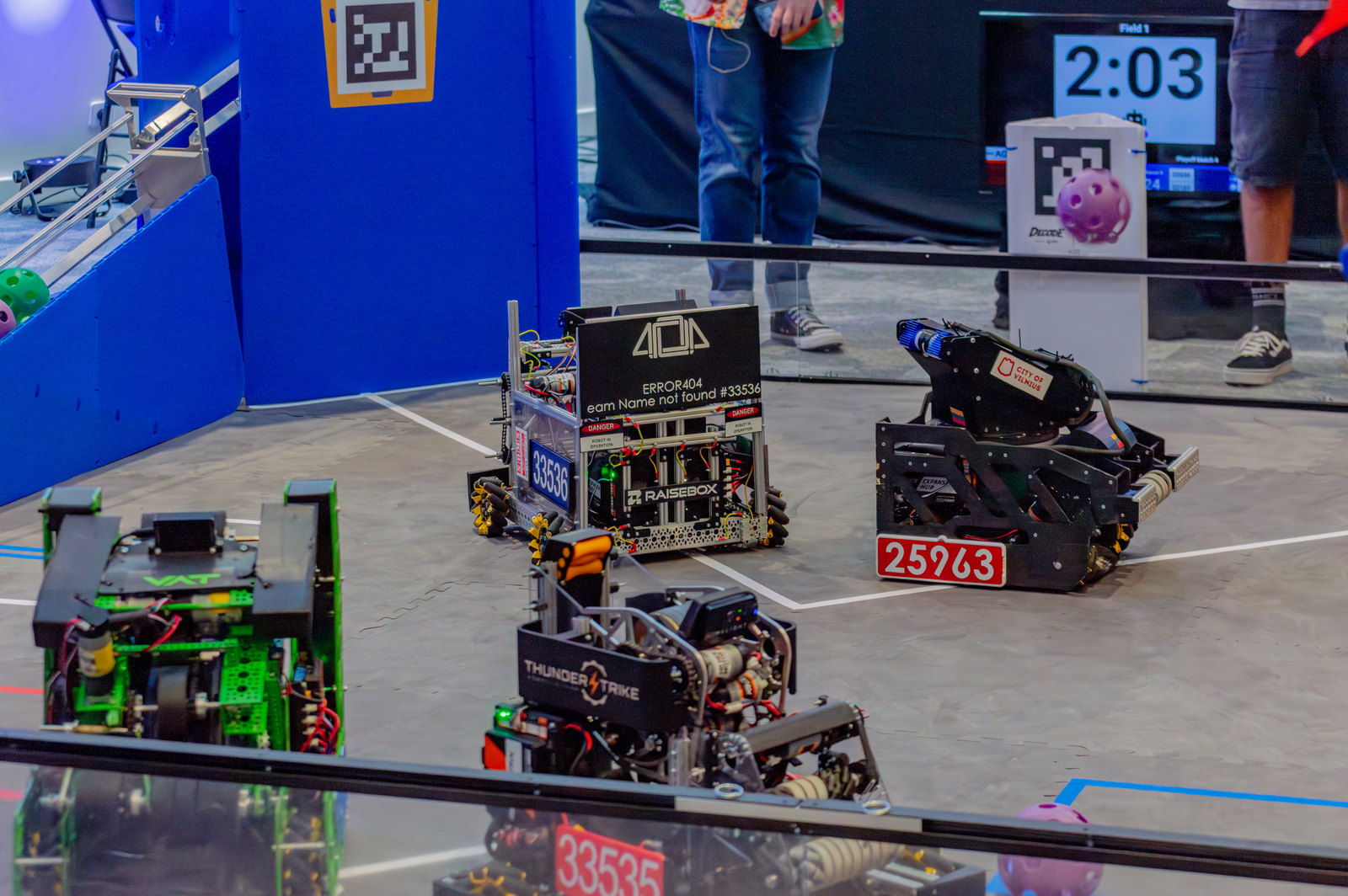
Four robots on the DECODE field mid-match, the goal at one end

The field

A walled floor about the size of a large room, with four robots inside. Two of them are yours — that pair is your alliance. The other two are racing you.
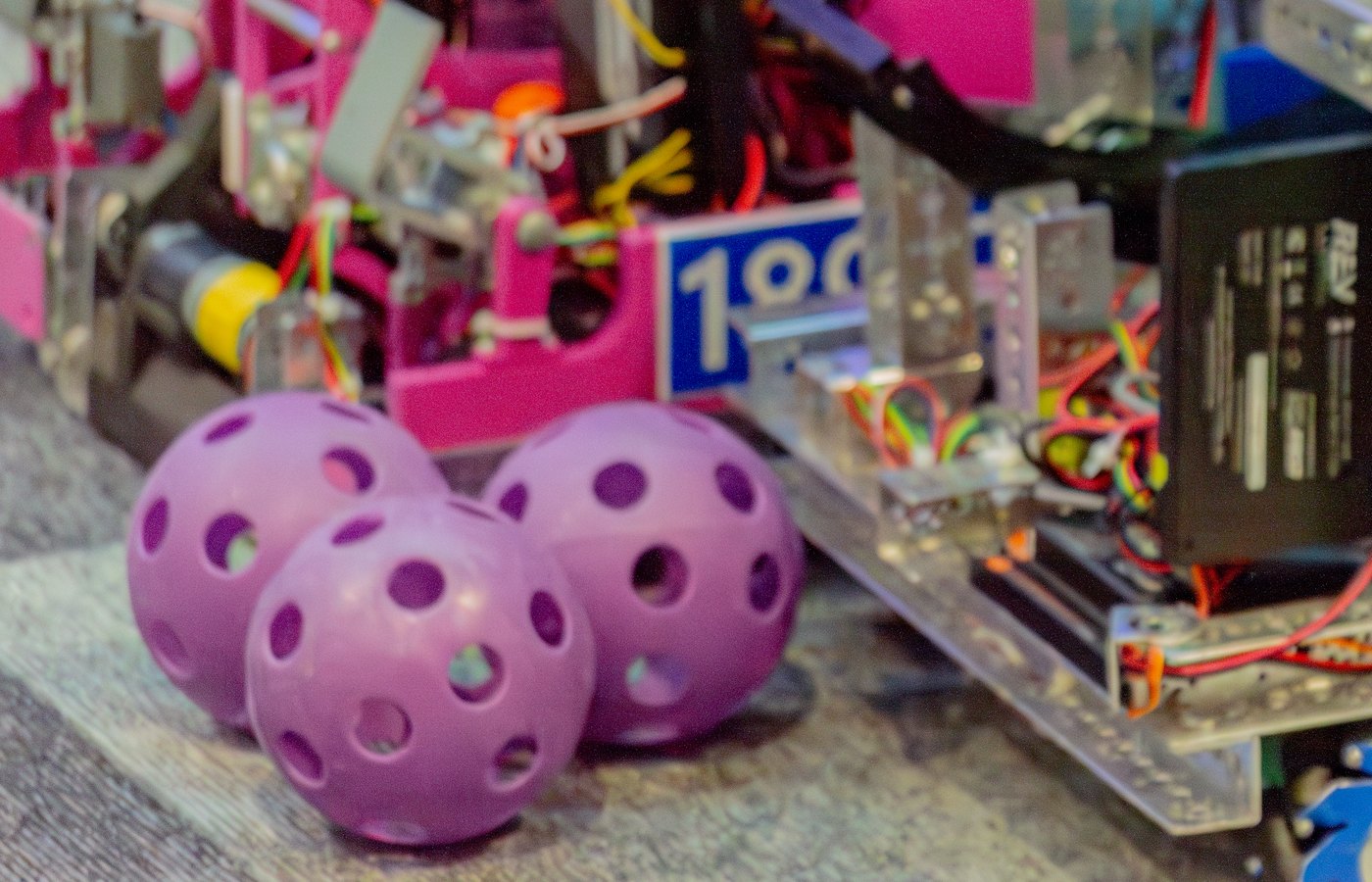
Artifacts — the hollow plastic balls robots collect and launch

The artifacts

The game calls them artifacts: hollow plastic balls, purple and green, scattered loose across the floor at the start. They are the only thing worth points, and there are never enough.
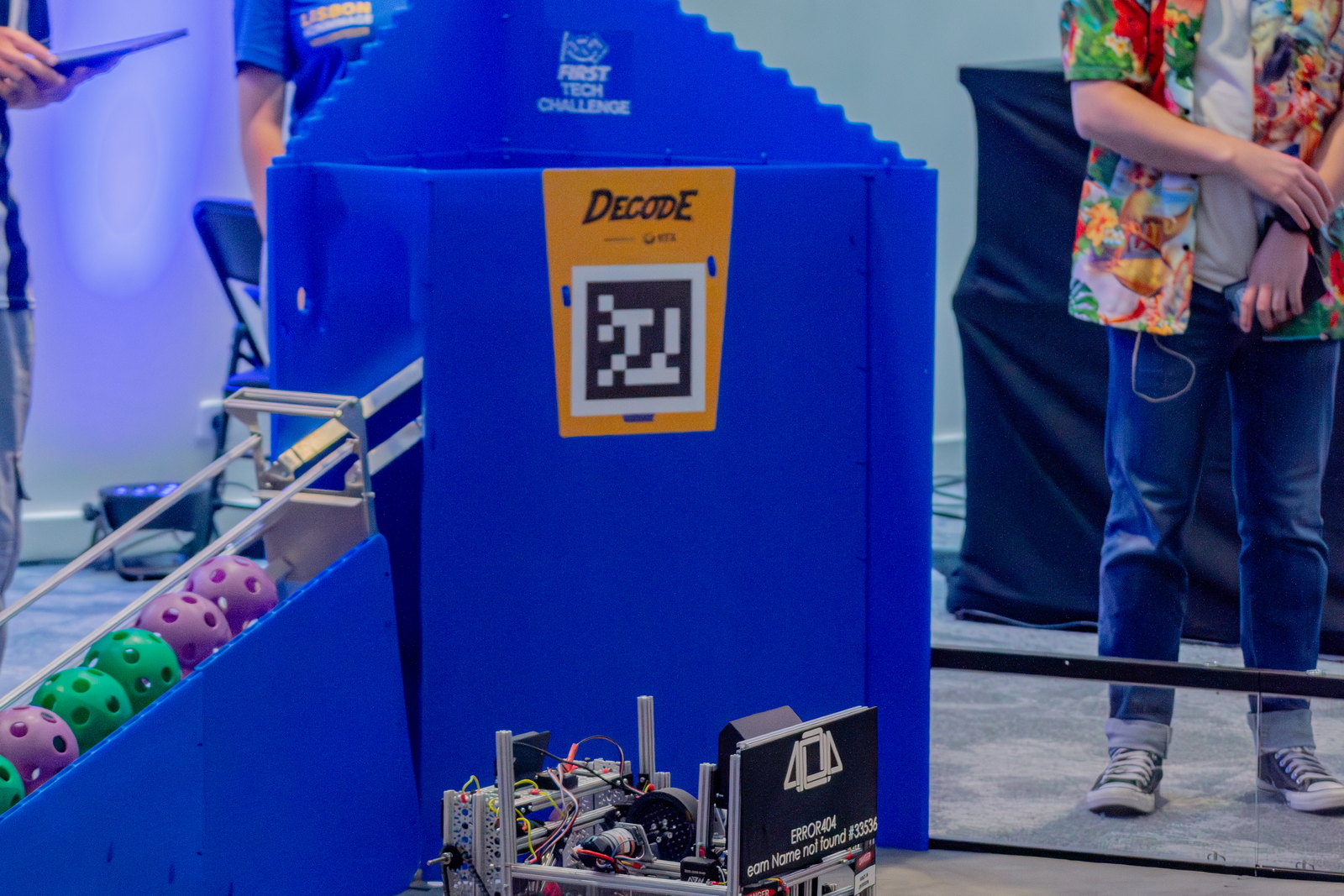
The DECODE goal — the scoring structure robots launch artifacts into

The goal

A target at the end of the field, one for each side. Every artifact a robot launches into its own goal scores. The match is one long scramble to feed it.
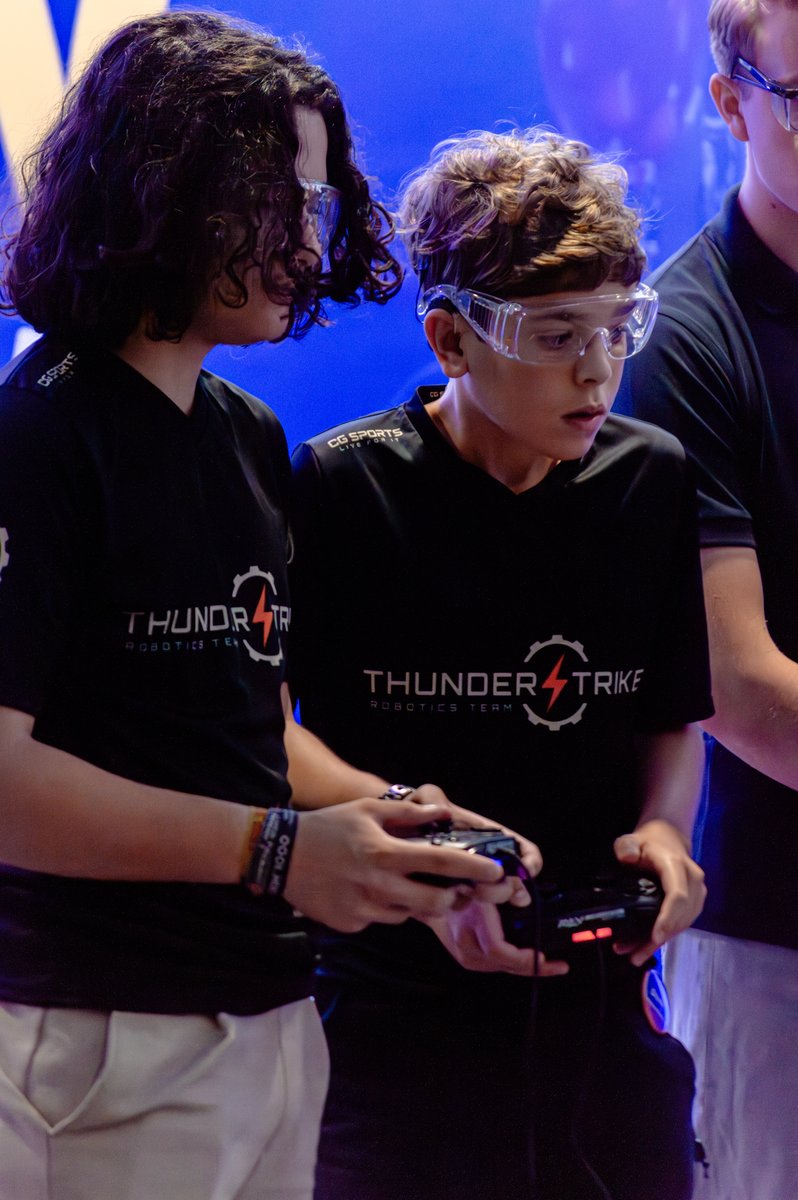
Two Thunderstrike students driving the robot with hand controllers

The first thirty seconds

Every match opens with thirty seconds of autonomous play: hands off the controls, nobody driving, the robot running on its own code. Then two students take over for the rest.

Collect them.
Launch them.
Score.

Everything you just watched the robot do is one team's answer to that.

The detail

Specification

Drivetrain
Configuration
Four-wheel mecanum, holonomic
Wheels
goBILDA mecanum with GripForce rollers
Gear ratio
12:1
Position sensing
goBILDA Pinpoint and SparkFun OTOS odometry integrated into the chassis
Intake
Row 1
Compliant and vectoring wheels — side and head-on collection
Row 2
Vectoring wheels with modular guides
Row 3
Flap row, feeds the transfer
Drive
Belt with sliding idler pulleys for tension
Gearbox
4:1
Structure
Double-shear motor bracket, reinforcement spar, ball bearings throughout
Transfer
Sensing
2× colour, 2× embedded touch (rear and under the TPU pressure spreader)
Ramp
Felt-paper lined, dual pressure spreaders
Detection accuracy
100%
Launcher
Architecture
Single axle — two grip wheels centred, one brass flywheel at each end
Motors
2× REV HD Hex, both driving the same direction
Opposing surface
Passive 3D-printed counter-rollers, ball-bearing mounted, free-spinning
Hood
Concave, sharing the counter-rollers' curvature
Software
Architecture
NextFTC command-based, five singleton subsystems on a Pedro-backed scheduler
Aiming
Assisted point-and-shoot — heading PID overrides driver rotation on a held button
Range
Distance→RPM curve calibrated from 30 on-robot samples, 0.7–3.7 m
Autonomous
Vision-guided artifact chase — trained neural-network detection, EKF tracking, live re-planning, four-state controller
Driver assists
Input shaping (Cubic / PCHIP / Exponential), automated return to base, vision pose correction
Sensing & control
Vision
Limelight on a servo-and-linkage tilting mount
Camera angles
22.5° down while hunting, calibrated 12° up for position fixes
Odometry
goBILDA Pinpoint and SparkFun OTOS both integrated in the chassis — one active at a time
Localisation
The active odometry source fused with Limelight MegaTag2 AprilTag pose through an outlier-rejecting filter
Controller
REV Control Hub

Built in the open

CAD and control code are public. Fork it, learn from it, beat us with it.

View source on GitHub

github.com/teamthunderstrike